
QT12-15 Automatic Concrete Block Making Machine
A high-capacity automatic block production solution for hollow blocks, solid blocks, concrete bricks, paving blocks, interlocking pavers, kerb stones, grass blocks and customized concrete products.
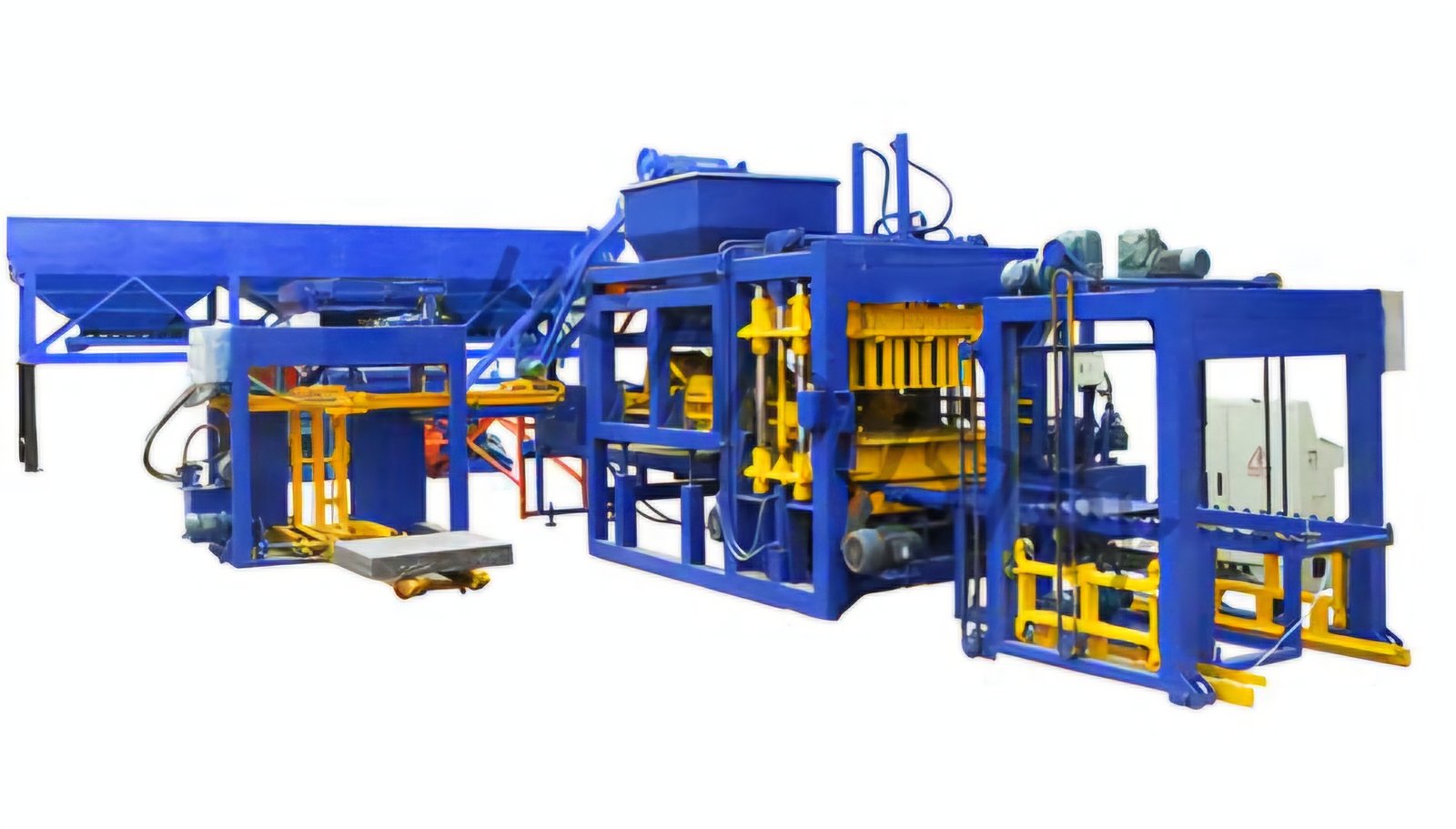
High-capacity concrete block & paver production solution
The QT12-15 Automatic Concrete Block Making Machine is a high-capacity industrial block production system designed for manufacturing hollow blocks, solid blocks, concrete bricks, paving blocks, interlocking pavers, kerb stones, grass blocks and customized concrete products.
With a large moulding area, strong vibration system, hydraulic compaction, PLC automatic control and flexible mould-changing design, the QT12-15 suits professional concrete product factories, construction material suppliers, real-estate developers, infrastructure projects and commercial block manufacturing plants.
Next Engineering Solutions Ltd provides complete support for machine selection, production line design, silo system, batching system, mixer, conveyor, moulds, pallet system, curing arrangement, installation and technical guidance.
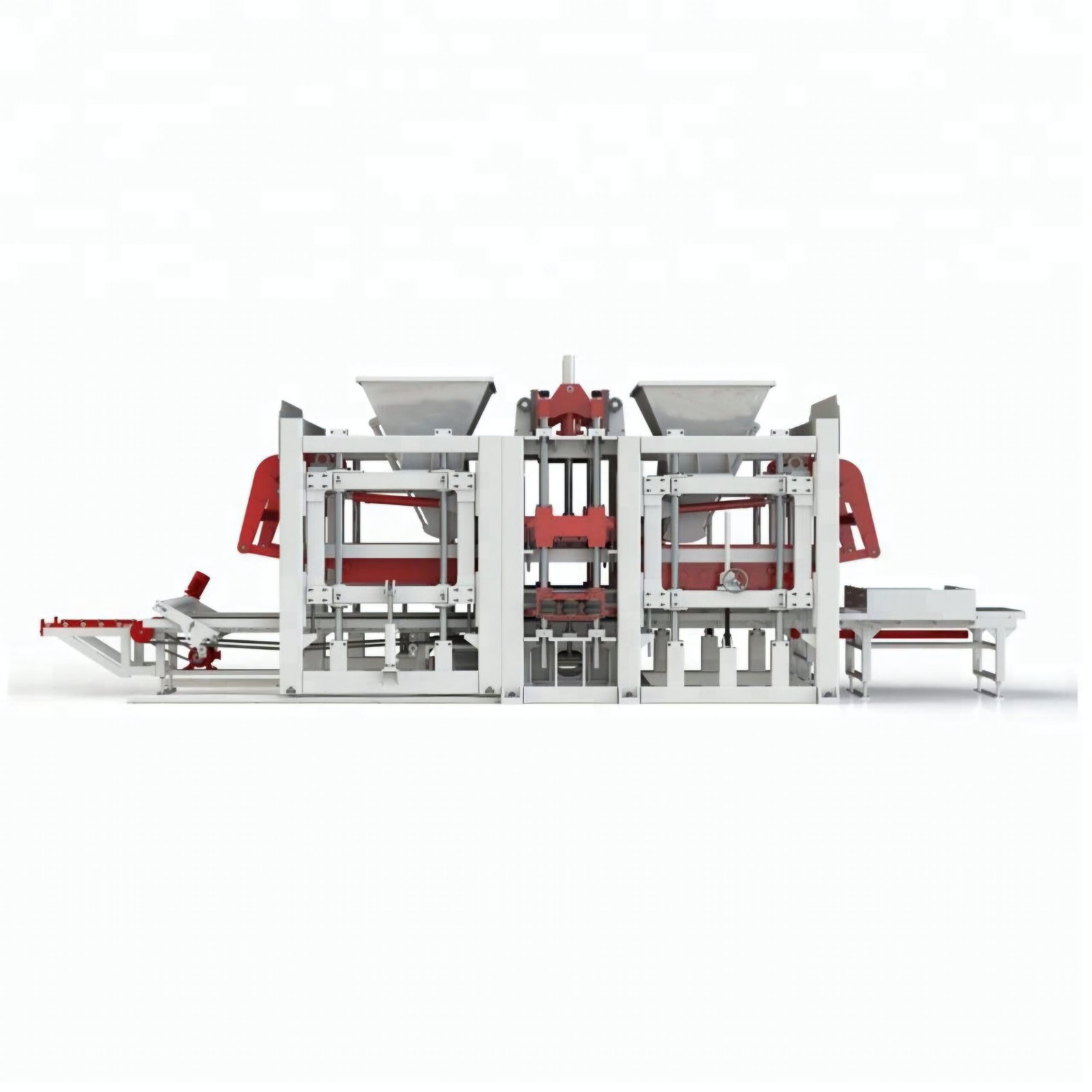
Designed for reliable commercial block production
The QT12-15 is built for investors who need a reliable, automatic and commercially productive concrete block manufacturing line with strong output and flexible product options.
Large Moulding Area
The large 1300 × 850 mm moulding area produces more blocks per cycle and improves daily output.
Multiple Block Types
Suitable for hollow blocks, solid bricks, pavers, interlocking blocks, kerbs, grass blocks and custom mould products.
Hydraulic Compaction
Strong hydraulic and vibration compaction produce dense, stable and well-shaped concrete products.
PLC Automatic Control
PLC operation supports automatic cycle control, parameter setting, fault alarm and manual maintenance mode.
Easy Mould Replacement
Different moulds produce different concrete products according to market demand.
Complete Plant Solution
Connects with cement silo, batching system, mixer, conveyors, pallet feeder, stacker and curing system.
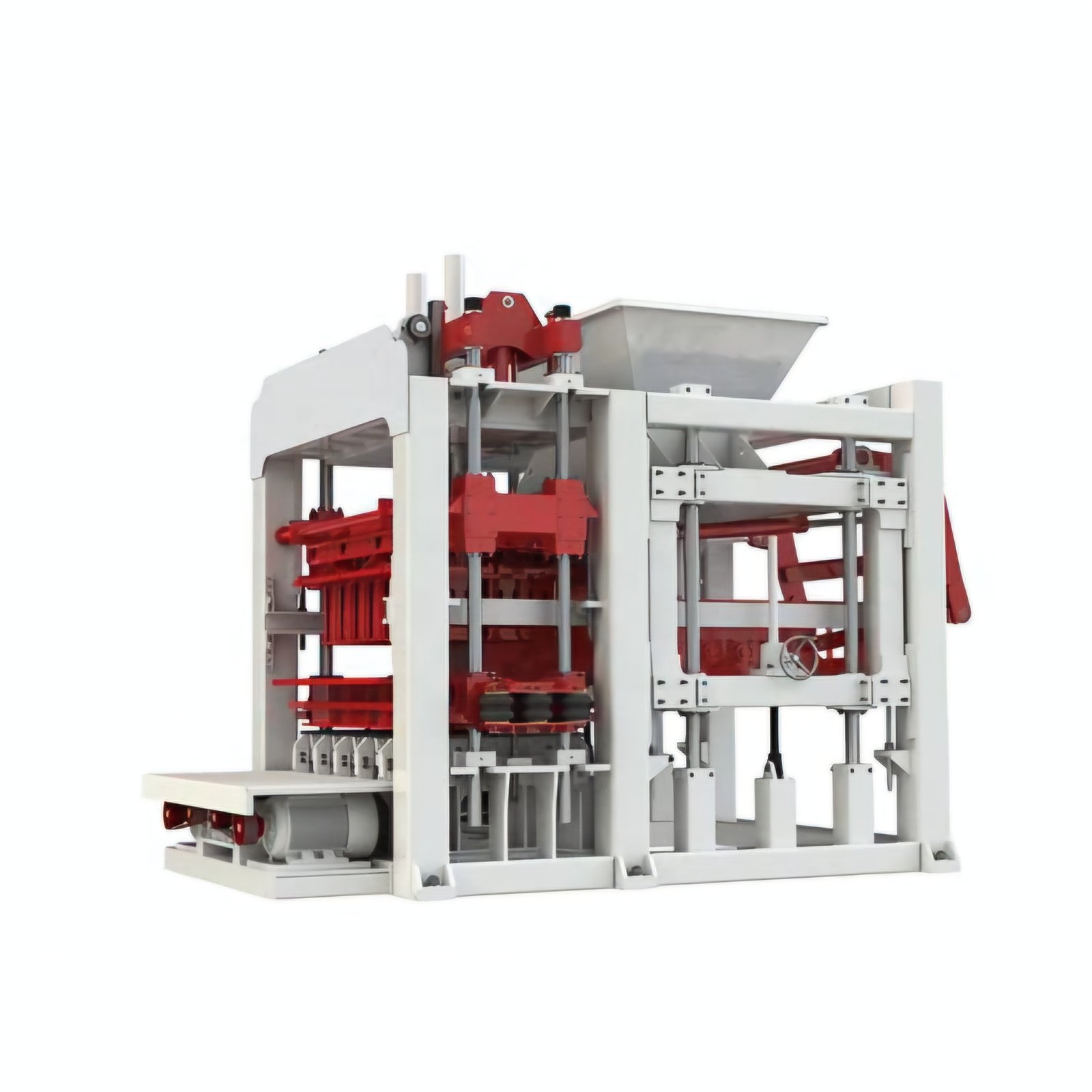
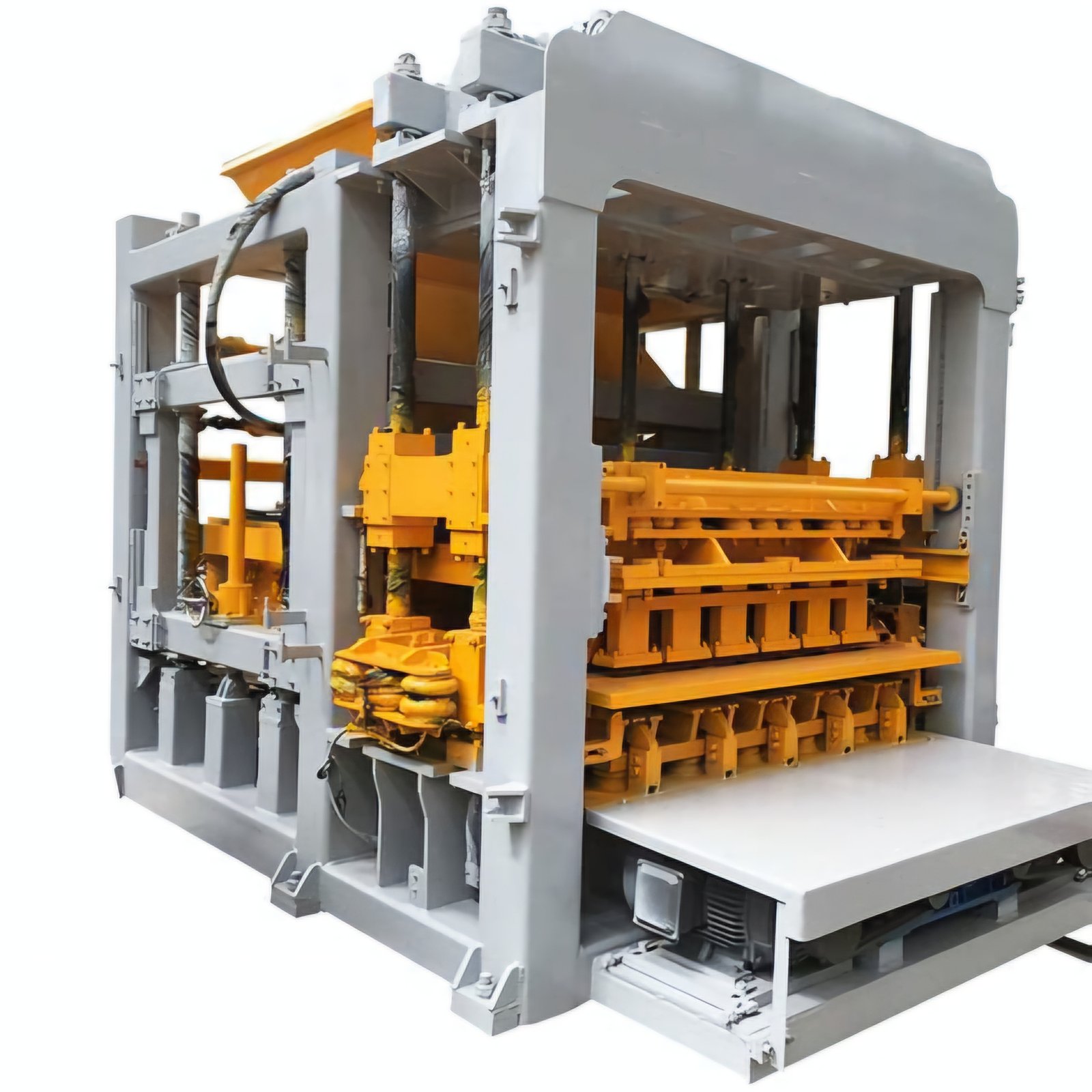
QT12-15 block machine & production line images
The QT12-15 production system can be configured with automatic feeding, batching, mixing, pallet feeding, forming, stacking, curing and finished product handling.
QT12-15 machine technical specification
This specification suits professional block plant planning. Final details may be adjusted based on mould design, raw material, automation level and project configuration.
| Machine Model | QT12-15 Automatic Concrete Block Making Machine |
| Machine Type | Full-Automatic Non-Burning Concrete Block Machine |
| Maximum Moulding Area | 1300 × 850 mm |
| Finished Product Height | 50–300 mm |
| Forming Cycle | 10–20 seconds, depending on product type |
| Vibration Table Power | 2 × 11 kW |
| Vibration Frequency | 47–75 Hz |
| Exciting Force | Approx. 100 kN |
| Total Installed Power | Approx. 53 kW |
| Main Machine Weight | Approx. 13 tons |
| Pallet Size | Approx. 1400 × 900 × 25–30 mm |
| Control System | PLC Automatic Control System |
| Operation Mode | Automatic / Manual / Maintenance Mode |
| Product Type | Hollow block, solid block, paver, kerb stone, grass block, customized concrete product |
| Raw Materials | Cement, sand, stone chips, quarry dust, fly ash, slag, crushed stone, pigment, additive |
Note: Final technical specification, electrical and hydraulic component brands, mould output, pallet quantity and complete line configuration should be confirmed according to project requirements.
QT12-15 block production capacity
Capacity depends on product size, mould design, raw material quality, moisture control, cycle time, curing system and operator efficiency. Practical capacity is more useful for planning than theoretical output.
| Product Type | Common Size | Pcs / Mould | Practical Capacity / 8 Hours |
|---|---|---|---|
| Hollow Block | 390 × 190 × 190 mm | 12 pcs | Approx. 13,800–27,600 pcs/day |
| Hollow Block | 400 × 200 × 200 mm | 12 pcs | Approx. 13,800–27,600 pcs/day |
| Partition Block | 400 × 150 × 200 mm | 15 pcs approx. | Approx. 17,000–34,000 pcs/day |
| Thin Wall Block | 400 × 100 × 200 mm | 18 pcs approx. | Approx. 20,000–41,000 pcs/day |
| Solid Concrete Brick | 240 × 115 × 51 mm | 60–70 pcs approx. | Approx. 69,000–100,000 pcs/day |
| Concrete Paver | 200 × 100 × 60 mm | 40–44 pcs approx. | Approx. 46,000–63,000 pcs/day |
| Interlocking Paver | 225 × 112 × 60 mm | Project-based | Depends on mould design |
| Kerb Stone | Customized size | Project-based | Depends on mould design |
| Grass Block | Customized size | Project-based | Depends on mould design |
What types of blocks can QT12-15 produce?
The QT12-15 produces many types of concrete products by changing moulds. The product size, shape and pcs per mould depend on the final mould design.
Hollow Concrete Blocks
For wall construction, boundary walls, partition walls and building projects.
Solid Concrete Blocks
For heavy-duty construction, load-bearing work, foundation and masonry.
Paving Blocks
For roads, footpaths, parking areas, gardens, commercial spaces and yards.
Interlocking Pavers
Zigzag, I-shape, dumbbell, wave, Holland, square and rectangular pavers.
Kerb Stones
For road dividers, drainage sides, footpath edges and landscaping projects.
Grass Blocks
For parking areas, garden paths, eco-friendly pavement and landscaping.
Slope Protection Blocks
For river protection, drainage channels, embankments and erosion control.
Customized Products
Special concrete products developed according to mould and machine limits.
Hydraulic, PLC control & vibration compaction
The QT12-15 combines hydraulic forming, automatic PLC control and strong vibration compaction to produce dense, strong and well-shaped concrete products.
Hydraulic System
The QT12-15 uses a hydraulic forming system combined with vibration compaction, allowing the machine to produce dense, strong and well-shaped concrete products.
Hydraulic System Features
- Hydraulic pressure for mould lifting and pressing
- Stable pressure during block forming
- Strong compaction for better block density
- Suitable for hollow blocks, pavers and solid products
- Smooth machine movement during automatic operation
- Designed for continuous industrial production
Hydraulic Advantages
The hydraulic system maintains consistent product height, shape and compaction. For paver and solid block production, hydraulic pressure is especially important because these products require higher density and better surface strength.
Before final confirmation, the hydraulic pump, valve, cylinder, oil cooling system and working pressure can be selected according to the project configuration.
PLC Control System
The QT12-15 is designed with automatic PLC control for stable and efficient production.
Control System Facilities
- Automatic production cycle
- Manual operation mode for maintenance
- Touch screen operation panel
- Production parameter setting
- Vibration frequency adjustment
- Fault alarm and troubleshooting function
- Emergency stop system
- Sensor-based machine protection
PLC System Advantages
The PLC control system reduces human error, improves production consistency and makes the full line easier to operate. Operators can control feeding, vibration, mould movement, pallet feeding, block forming and stacking through the control system.
Vibration & Compaction System
The QT12-15 uses a strong vibration table system to compact concrete material inside the mould.
Vibration Features
- High-frequency vibration
- Uniform material distribution
- Strong block density
- Good product strength
- Smooth surface finish
- Suitable for dry concrete mix
- Adjustable vibration according to product type
Vibration Advantages
For hollow blocks, the vibration system helps achieve good shape and strength. For pavers and solid blocks, strong vibration improves density and surface quality.
Complete QT12-15 production line with silo
A professional QT12-15 block plant should not include only the main machine. For stable production, the complete line should include raw material storage, batching, mixing, forming, palletizing, curing and finished product handling.
Cement Silo System
Stores bulk cement and transfers it accurately into the weighing and mixing system.
| Equipment | Function |
|---|---|
| Cement Silo | Stores bulk cement |
| Fly Ash Silo (optional) | Stores fly ash if used in production |
| Screw Conveyor | Transfers cement / fly ash from silo to weighing hopper |
| Cement Weighing System | Controls accurate cement dosage |
| Level Indicator | Shows cement level inside silo |
| Dust Collector | Reduces cement dust during loading |
| Safety Valve | Protects silo pressure |
Recommended silo size: 50T, 80T or 100T depending on production capacity and cement supply system.
Aggregate Batching System
Measures sand, stone chips, quarry dust and aggregates according to the required mix ratio.
| Equipment | Function |
|---|---|
| Aggregate Batching Machine | Measures sand, stone chips, quarry dust and aggregates |
| Multiple Storage Bins | Keeps different materials separately |
| Electronic Weighing System | Ensures accurate raw material ratio |
| Belt Conveyor | Transfers aggregate to mixer |
Common options: PL1200 batching machine, or PL1600 for higher capacity.
Mixing System
Prepares a uniform dry concrete mix with cement, sand, stone chips, water, pigment and additives.
| Equipment | Function |
|---|---|
| Concrete Mixer | Mixes cement, sand, stone chips, water and additives |
| Water Dosing System | Controls water quantity |
| Additive Dosing System (optional) | Improves strength or workability |
| Pigment Dosing System (optional) | Used for colored paver production |
Recommended: JS750 mixer for standard production, JS1000 for higher capacity or paver production.
Material Conveying System
Connects the silo, batching machine, mixer and main block machine for smooth production flow.
| Equipment | Function |
|---|---|
| Belt Conveyor | Transfers mixed material to block machine |
| Cement Screw Conveyor | Transfers cement from silo |
| Aggregate Conveyor | Transfers sand and stone chips |
| Discharge Conveyor | Moves mixed concrete to the machine hopper |
Main Block Forming System
The core section where mixed concrete is fed into the mould and formed by vibration and hydraulic pressure.
| Equipment | Function |
|---|---|
| QT12-15 Host Machine | Main block forming machine |
| Hydraulic Station | Provides hydraulic power |
| Vibration System | Compacts concrete material |
| PLC Control Cabinet | Controls automatic operation |
| Mould System | Produces different block types |
| Pallet Feeder | Supplies pallets automatically |
| Material Feeder | Feeds concrete into mould |
Face Material Feeding System (Optional)
For colored paver production, a face-material system can be added to produce paving blocks with a colored top layer and strong base layer.
- Colored pavers
- Decorative paving blocks
- Premium surface bricks
- Road and garden pavers
Pallet & Stacking System
Handles fresh blocks after forming and moves them safely toward the curing area.
| Equipment | Function |
|---|---|
| Pallet Feeder | Supplies pallets automatically |
| Block Stacker | Stacks fresh blocks with pallets |
| Curing Rack (optional) | Holds fresh blocks during curing |
| Transfer Cart (optional) | Moves blocks to curing area |
| Forklift | Handles pallets and finished products |
Curing System
Concrete blocks require proper curing to achieve strength. The curing method can be selected according to land, production capacity, investment and product quality requirements.
Natural Curing
Blocks are moved to a curing yard and watered regularly.
Best for small & medium factories with landRack Curing System
Fresh blocks are stored in curing racks for organized curing.
Best for higher production & space managementChamber Curing System
Blocks are cured in a controlled curing room.
Best for premium & faster strength gainCuring quality directly affects final block strength, surface durability and long-term product performance.
Finished Product Handling
After proper curing, finished blocks are moved, cubed, packed, stored and delivered to the project or market.
| Equipment | Function |
|---|---|
| Forklift | Moves cured blocks |
| Block Cuber (optional) | Arranges finished blocks into cubes |
| Packing System (optional) | Strapping and packaging |
| Yard Storage | Final product storage before delivery |
Cement silo, batching & mixing setup
For stable block quality, correct cement dosage, aggregate ratio, moisture control and mixing uniformity directly affect block strength and surface finishing.
| Equipment | Function |
|---|---|
| Cement Silo | Stores bulk cement for continuous production |
| Fly Ash Silo (optional) | Stores fly ash if used in production mix |
| Screw Conveyor | Transfers cement or fly ash to weighing hopper |
| Aggregate Batching Machine | Measures sand, stone chips, quarry dust and aggregates |
| Concrete Mixer | Mixes cement, aggregate, water, pigment and additives |
| Water Dosing System | Controls accurate water quantity for dry concrete mix |
| Pigment Dosing System | Optional system for colored paving blocks |
Typical QT12-15 production process
The process starts from cement and aggregate storage and ends with cured finished blocks ready for delivery.
Cement Storage
Cement is stored in the silo.
Batching Bin Loading
Sand, stone chips and aggregate loaded into batching bins.
Cement Transfer
Cement is transferred by screw conveyor.
Raw Material Weighing
Materials are weighed to the mix ratio.
Mixer Feeding
Materials are transferred to the mixer.
Water & Additives
Water and additives are added.
Concrete Transfer
Mixed concrete is sent to the block machine.
Pallet Supply
Pallet is automatically supplied.
Mould Feeding
Concrete is fed into the mould.
Block Forming
Vibration and hydraulic compaction form the block.
Fresh Block Carrying
Fresh blocks are carried with pallet.
Stacking
Blocks stacked or moved to curing area.
Curing
Blocks are cured properly.
Storage & Delivery
Finished products stored and delivered.
Raw materials for QT12-15 block production
The QT12-15 can use different raw materials depending on local availability and product requirements. Proper mix design is important for product strength and quality.
- Cement
- Sand
- Stone chips
- Quarry dust
- Fly ash
- Slag
- Crushed stone
- Aggregate
- Pigment
- Additive
- Water
Recommended plant layout sections
A good layout reduces labor, saves time, improves curing management and increases daily production efficiency.
- Raw material storage area
- Cement silo area
- Batching & mixing area
- Block forming machine area
- Fresh block stacking area
- Curing area
- Finished product storage yard
- Forklift movement area
- Electrical control room
- Spare parts & maintenance area
QT12-15 machine advantages for investors
The QT12-15 is a strong choice for investors planning medium or large-scale concrete block production — with high capacity, multiple product possibilities, strong block quality, automatic operation, suitability for local raw materials, and the option to upgrade with silo, automatic batching, face-material feeder, rack curing, cuber and packing systems.
Project information required for quotation
To prepare an accurate quotation, layout and technical proposal, the following project information is recommended.
Product Type
Required block, paver, kerb, solid brick or custom product type.
Block Size
Final block size and shape for mould design and capacity calculation.
Daily Capacity
Target production per day and working hours per shift.
Raw Material
Cement, sand, stone chips, fly ash, quarry dust and local material quality.
Cement Supply
Bag cement or bulk cement silo system requirement.
Automation Level
Manual curing, rack curing, cuber, pallet system and complete line automation.
Frequently asked questions
Can the QT12-15 produce different block sizes?
Yes. Different block sizes can be produced by changing moulds. The machine can produce hollow blocks, solid bricks, pavers, kerbs, grass blocks and customized concrete products.
Can it produce colored paving blocks?
Yes. For colored paver production, a face-material feeding system and pigment dosing system can be added.
What is the daily capacity of QT12-15?
For 390 × 190 × 190 mm hollow blocks, practical production can be around 13,800–27,600 pcs per 8 hours, depending on cycle time, mould design, raw material and production efficiency.
Does the machine need a cement silo?
A cement silo is recommended for professional production. It improves cement storage, reduces manual labor and gives better batching accuracy.
What mixer is suitable for QT12-15?
JS750 is suitable for standard production. JS1000 can be selected for higher production or paver-focused production.
Can fly ash be used?
Yes. Fly ash can be used as part of the raw material mix if the product design and mix ratio are suitable.
Is the machine fully automatic?
Yes. The QT12-15 is designed as a full-automatic block making machine. Manual mode is also available for maintenance and adjustment.
How many moulds are needed?
It depends on the business plan. Usually investors start with 2–4 moulds, such as hollow block, solid brick, paver and kerb stone.
Start your concrete block manufacturing project with NES
Next Engineering Solutions Ltd provides professional solutions for concrete block and paver production lines. From machine selection to complete plant planning, we help investors choose the right equipment according to capacity, product type, raw materials, land and budget.
Request QT12-15 Quotation →Technical values and production outputs are typical reference figures. Final configuration should be confirmed based on mould design, product size, raw material condition and project requirements.