Supporting Equipment for Clay Brick Manufacturing Plant
Complete range of auxiliary machinery and kiln-side equipment that powers the smooth, continuous operation of automatic tunnel kiln and hybrid Hoffman kiln brick plants — from kiln cars and ferry pushers to pulverized coal burners, monitoring systems, and refractory kiln construction materials.
Engineered for Continuous Brick Plant Operation
Next Engineering Solutions Ltd (NES) supplies a complete line of supporting equipment for clay brick manufacturing plants. These machines do not form or shape the brick — instead, they handle the critical functions that keep a tunnel kiln or hybrid Hoffman kiln plant running 24/7: moving kiln cars, firing the kiln, controlling temperature and airflow, transporting materials, and maintaining the refractory structure of the kiln itself.
Every piece of supporting equipment is selected and engineered to match the plant capacity, kiln dimensions, fuel type, and automation level of the project. Whether you operate a 50,000 brick/day Hoffman kiln plant or a 200,000+ brick/day fully automatic tunnel kiln line, the right supporting equipment determines your fuel cost, brick quality, labor requirement, and plant uptime.
Moving Bricks Through Dryer & Kiln
Mechanical and hydraulic handling equipment that transfers kiln cars between dryer, kiln, marshalling tracks and unloading bays.
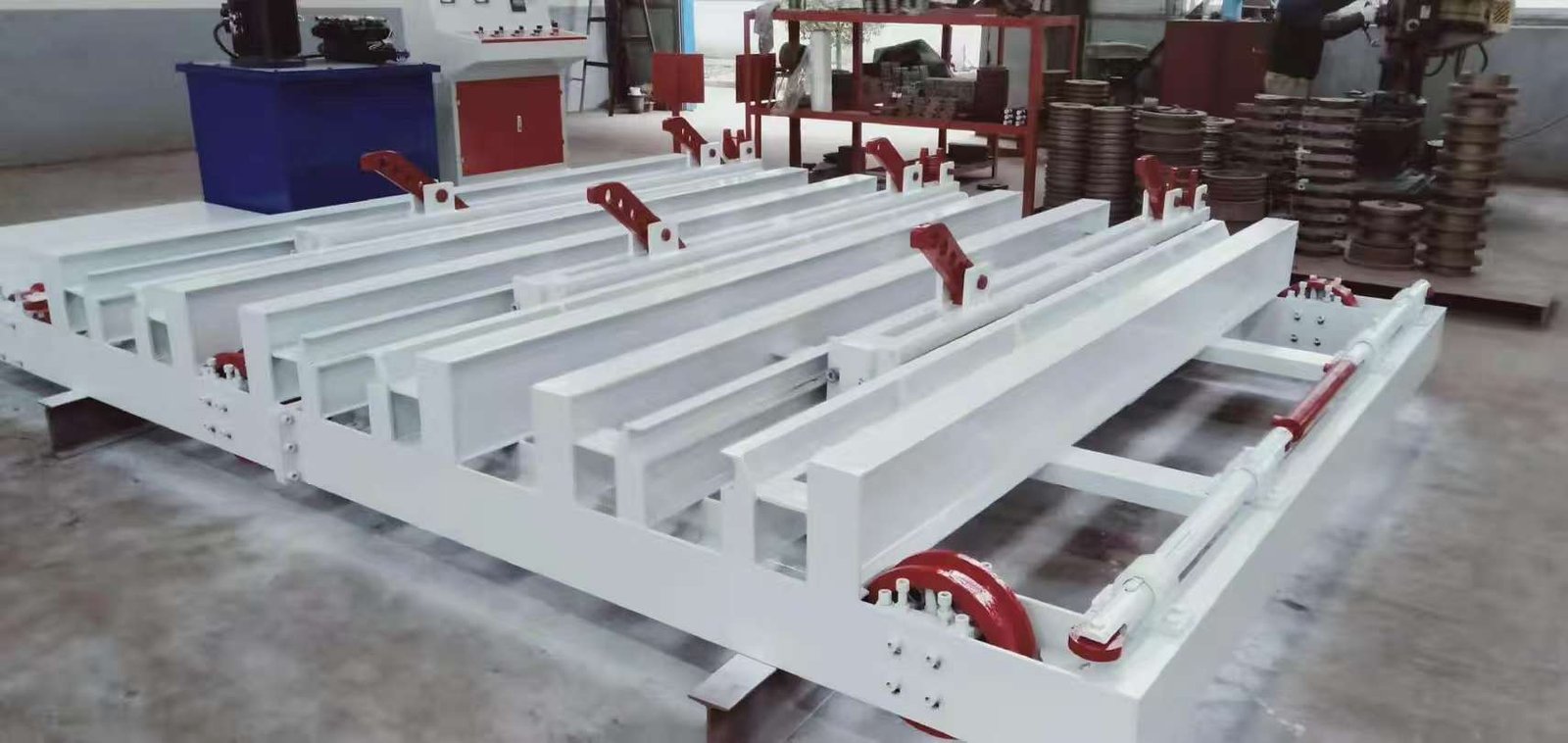
Ferry Pusher (Kiln Car Transfer Cart)
The Ferry Pusher is the central kiln car handling machine in any tunnel kiln or tunnel dryer brick plant. It transfers loaded and empty kiln cars laterally between the dryer track, the kiln track, the marshalling track, and the unloading line.
A single ferry pusher can serve multiple parallel kiln and dryer lines, eliminating the need for separate transfer mechanisms and reducing both labor and floor space requirements. The unit runs on its own rail set perpendicular to the kiln, with onboard motorized rollers that move the kiln car on and off the deck.
- Capacity: 1 kiln car per cycle
- Power: 5.5 – 14 kW
- Drive: motorized roller + gear reducer
- Control: panel + hand-held remote
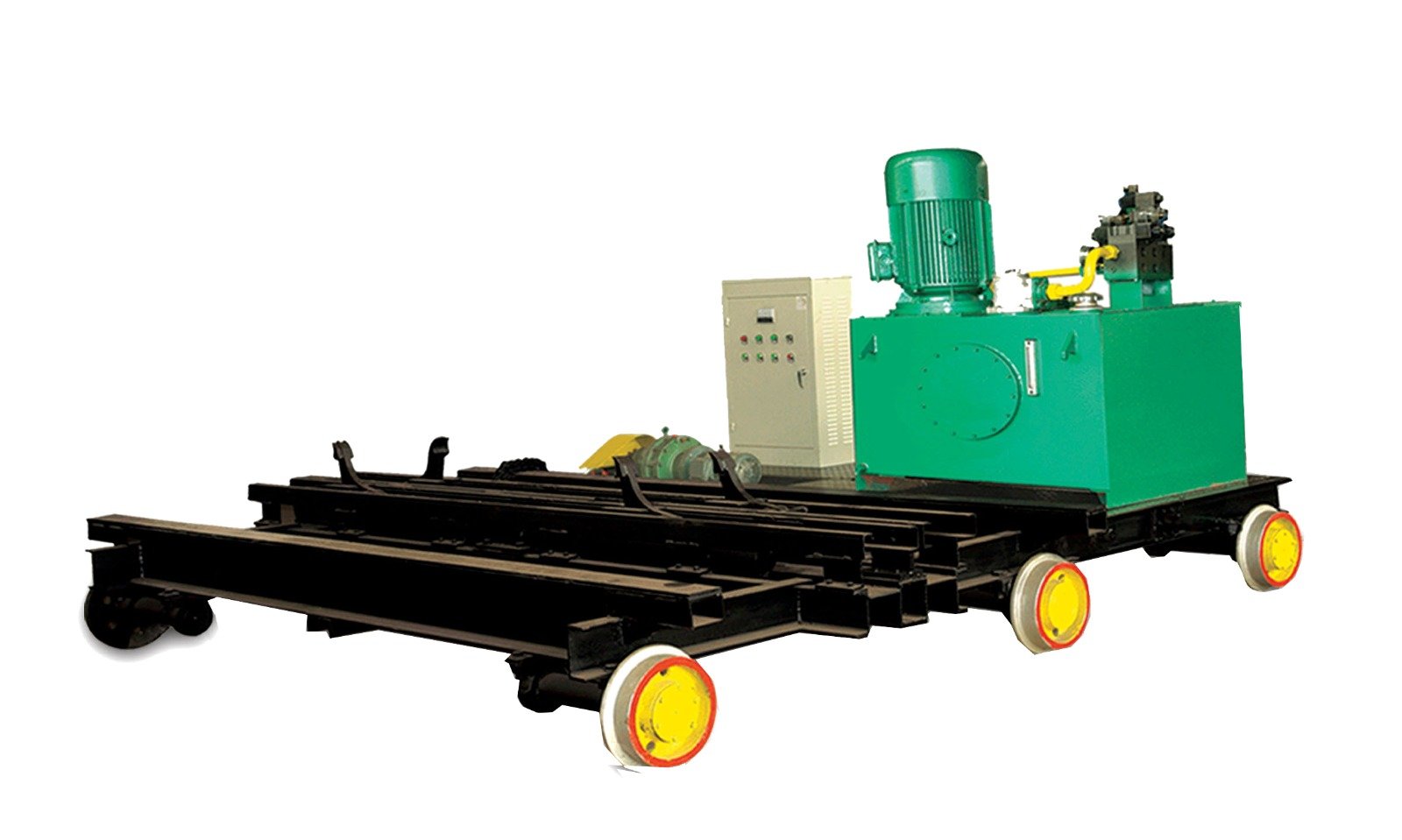
Hydraulic Ferry Cart
The Hydraulic Ferry Cart is an advanced version of the ferry pusher that combines lateral transfer with a built-in hydraulic pushing mechanism. After the cart positions itself in line with the kiln track, the hydraulic cylinder extends and pushes the kiln car directly into the kiln entrance — completely eliminating the need for a separate hydraulic kiln car pusher.
This integrated design is preferred for projects where floor space is limited or where multiple parallel kilns must share a single transfer machine. The hydraulic action gives smoother, more controlled kiln car movement than chain or cable-driven systems.
- Pushing force: 50 – 150 kN
- Hydraulic station: built-in
- Stroke: matches kiln car length
- Operation: semi-automatic / automatic
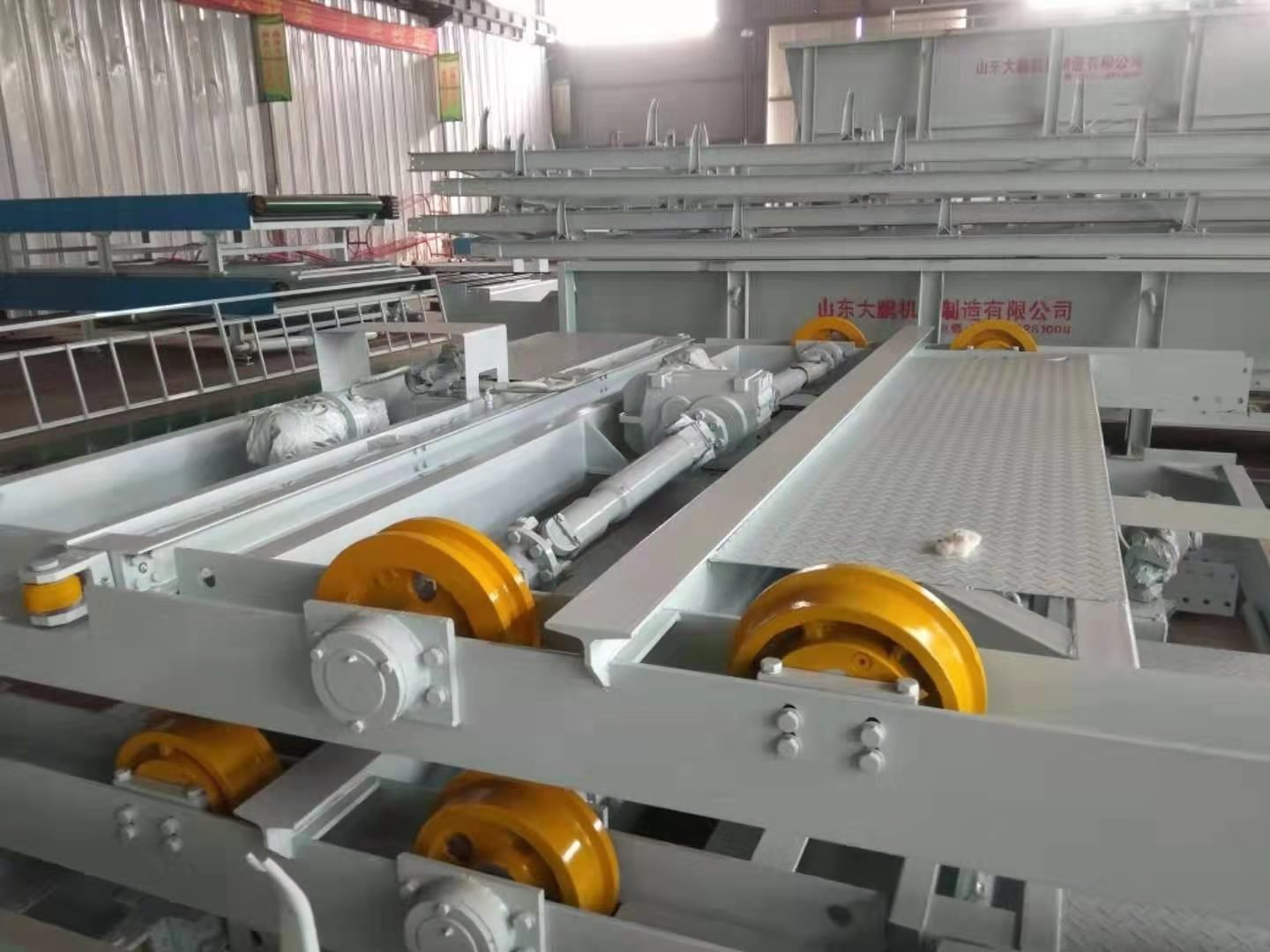
Hydraulic Kiln Car Pusher & Hauling Machine
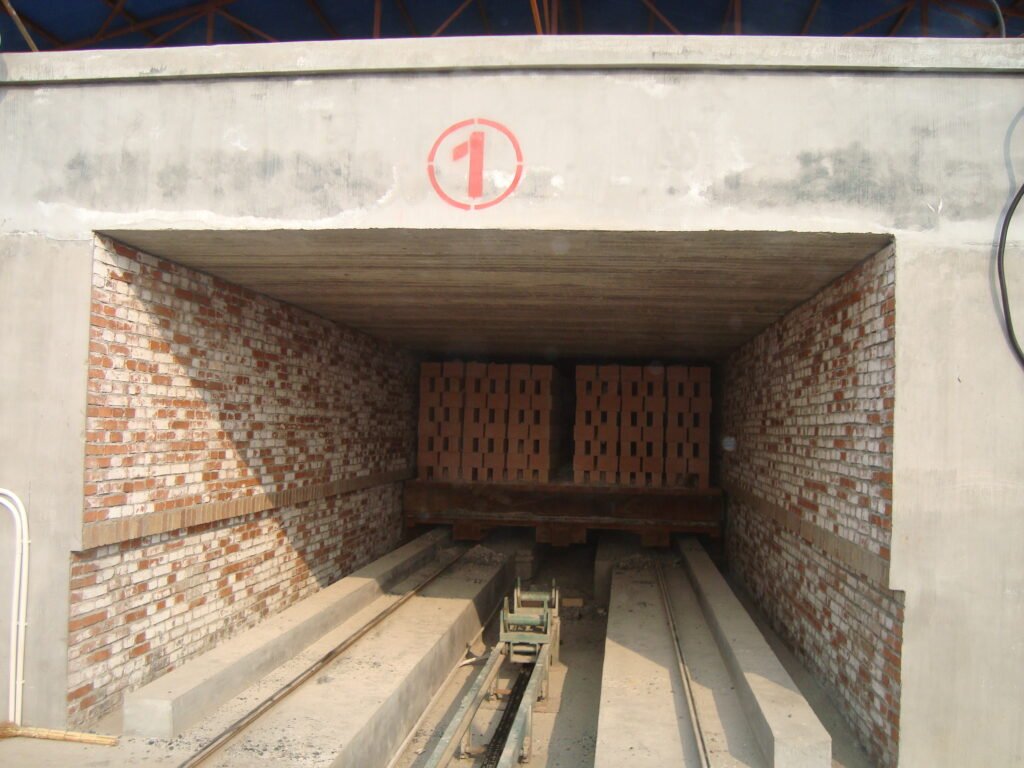
The Hydraulic Kiln Car Pusher is mounted at the kiln entrance and pushes each new kiln car into the tunnel kiln at the precise scheduled interval (the “push cycle”). It is one of the most critical pieces of equipment because the push cycle directly determines kiln throughput and brick quality.
The companion Hauling Machine (cable winch or chain puller) is installed at the kiln exit to draw the train of cars forward, working in synchronization with the pusher. Together they ensure smooth, jerk-free movement of the entire kiln car train — protecting the green/fired brick stack from collapse.
- Pushing force: typically 80 – 200 kN
- Pushing stroke: 1 – 1.5 × car length
- Cycle time: 30 – 90 minutes (kiln-dependent)
- Control: PLC-integrated, auto/manual
Kiln Cars, Drying Cars & Refractory Materials
The physical platforms that carry bricks through the dryer and kiln, plus the refractory lining that contains the high-temperature firing zone.
Kiln Car (Tunnel Kiln Wagon)
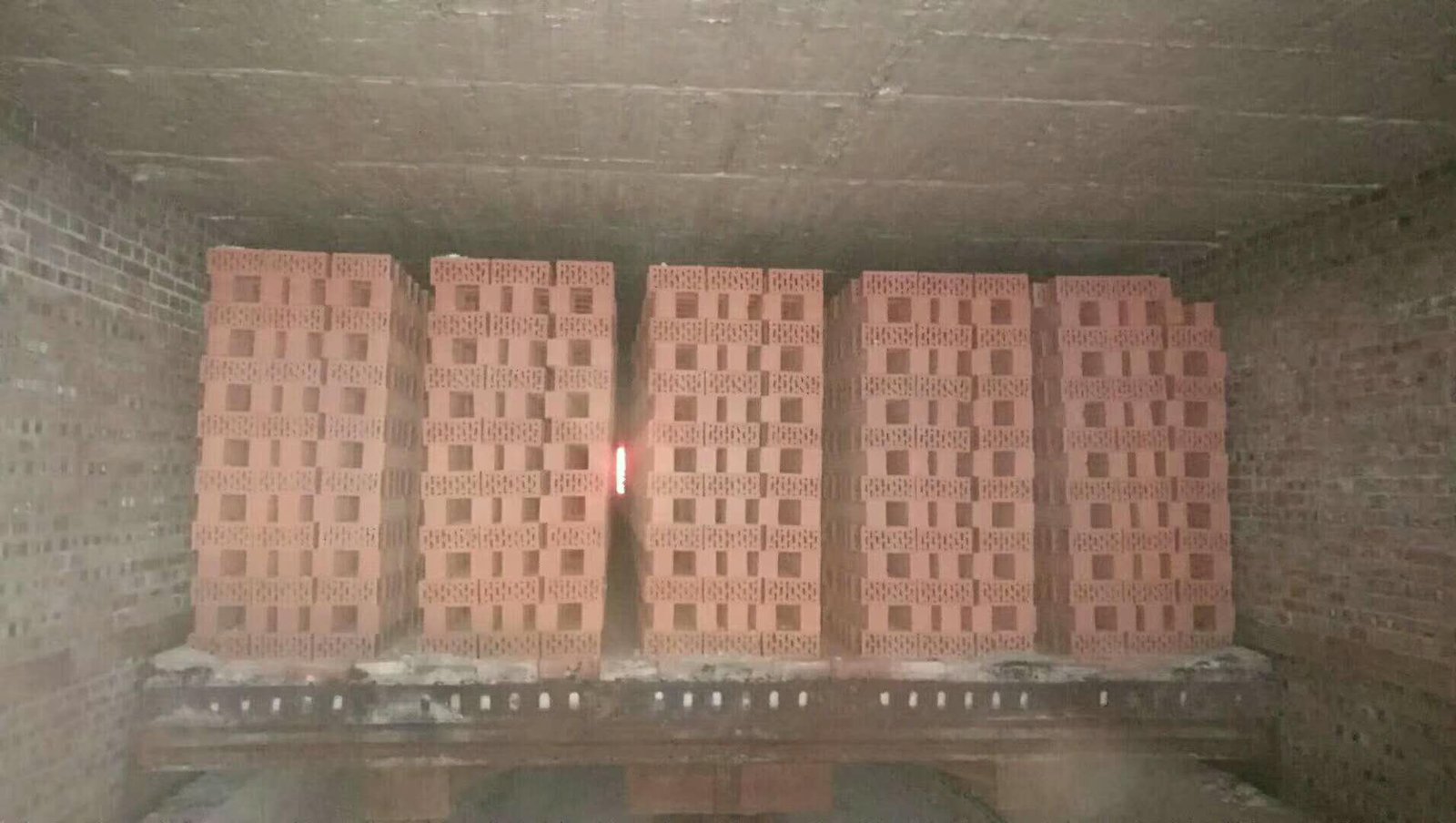
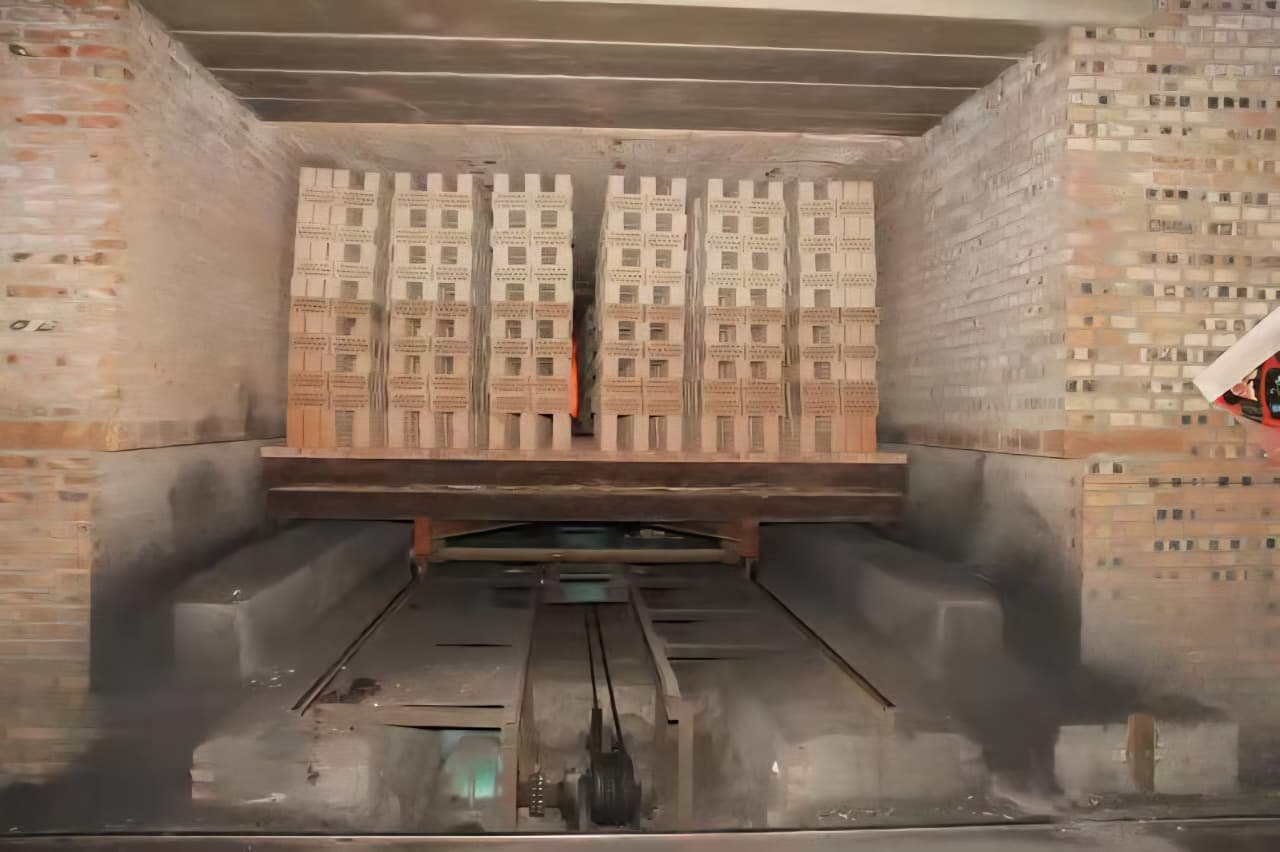
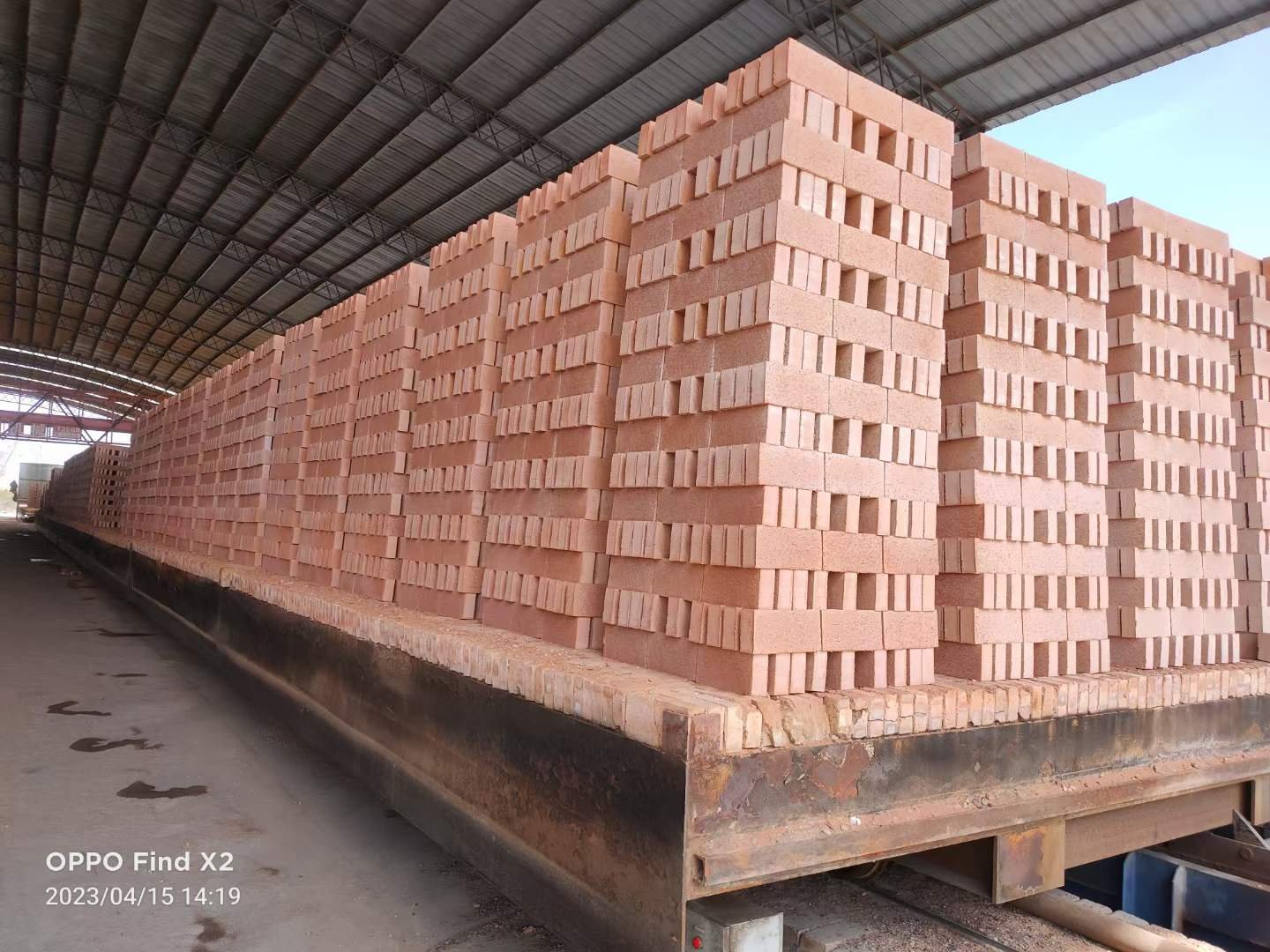
The Kiln Car is the moving platform that carries the green-brick stack through the entire tunnel kiln — from preheating to firing to cooling. Each car has a heavy steel chassis with hardened wheels running on the kiln rail, topped with a refractory deck that protects the chassis from the 900–1100 °C firing zone.
The refractory superstructure typically uses dense fireclay or cordierite blocks resistant to thermal shock and capable of withstanding temperatures around 1300 °C, with a layer of insulating refractory between the hot face and the steel carriage to keep the wheels and rails cool.
- Deck size: typ. 2.8m × 3.2m – 5.6m wide
- Hot-face refractory: fireclay / cordierite
- Insulation: lightweight refractory / ceramic fibre
- Service life: 3 – 5 years (re-linable)
Drying Car (Tunnel Dryer Wagon)
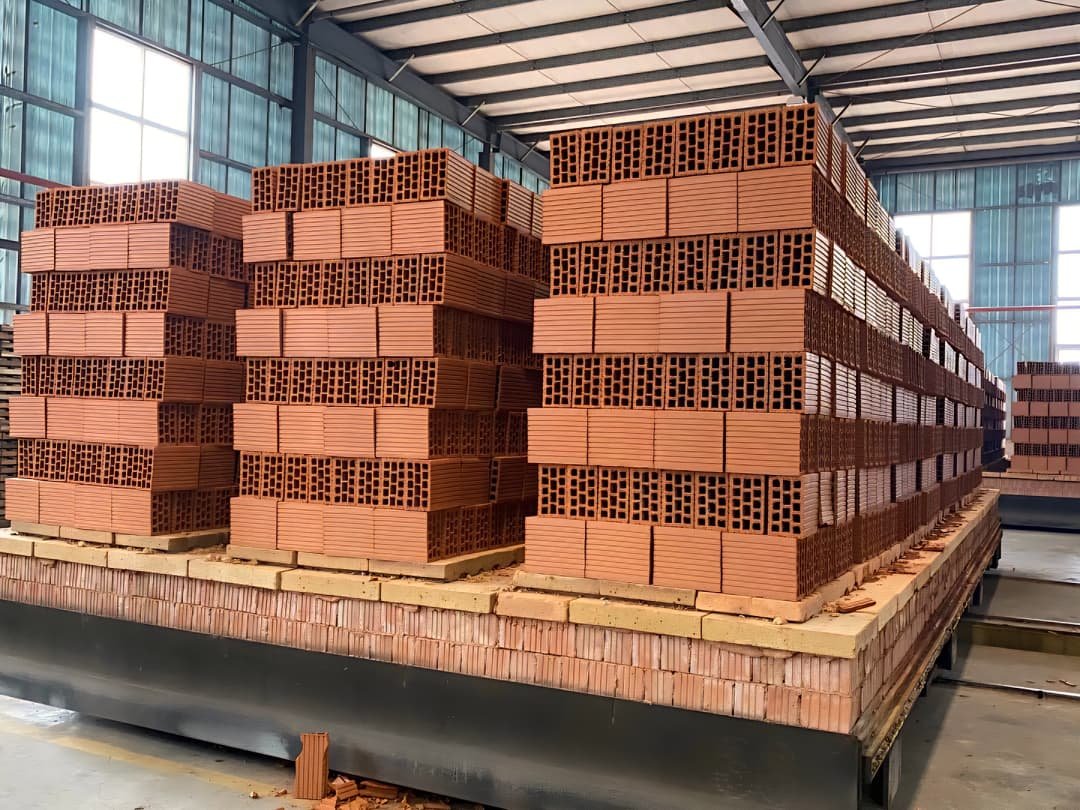
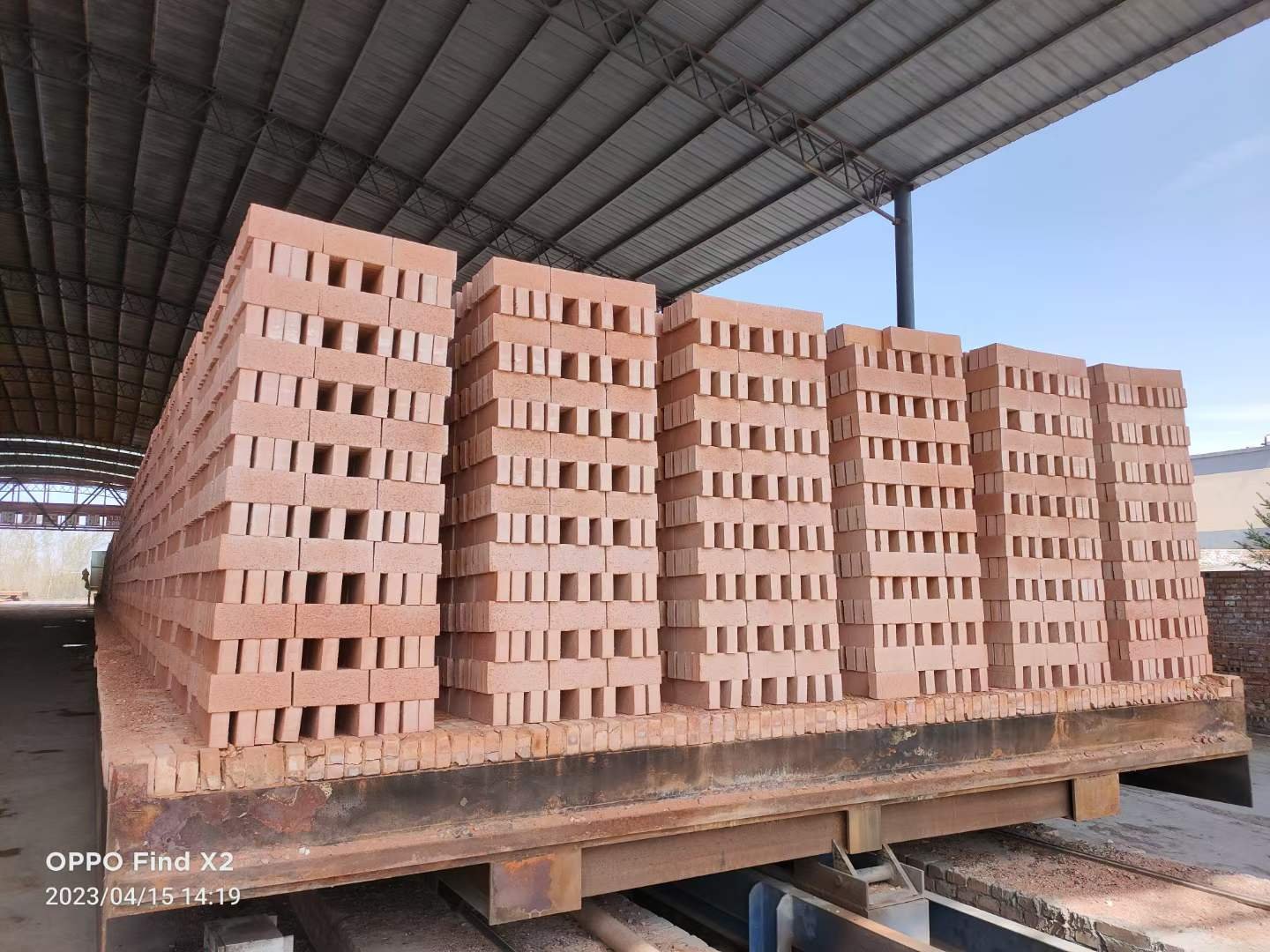
The Drying Car is the lighter, dryer-zone counterpart of the kiln car. It carries freshly extruded green bricks through the tunnel dryer where waste heat from the kiln removes moisture from roughly 20% down to less than 2% before the bricks are transferred to the kiln car for firing.
Because the dryer environment is hot but not high-temperature (typically 60–180 °C), the drying car is built lighter than a kiln car, with steel or grid decks that maximize airflow contact with the green-brick stack and accelerate uniform drying.
- Operating temp: 60 – 180 °C
- Drying cycle: 24 – 48 hours
- Deck type: ventilated steel grid / mesh
- Construction: lightweight steel chassis
Kiln Construction Material (Refractory & Insulation Package)
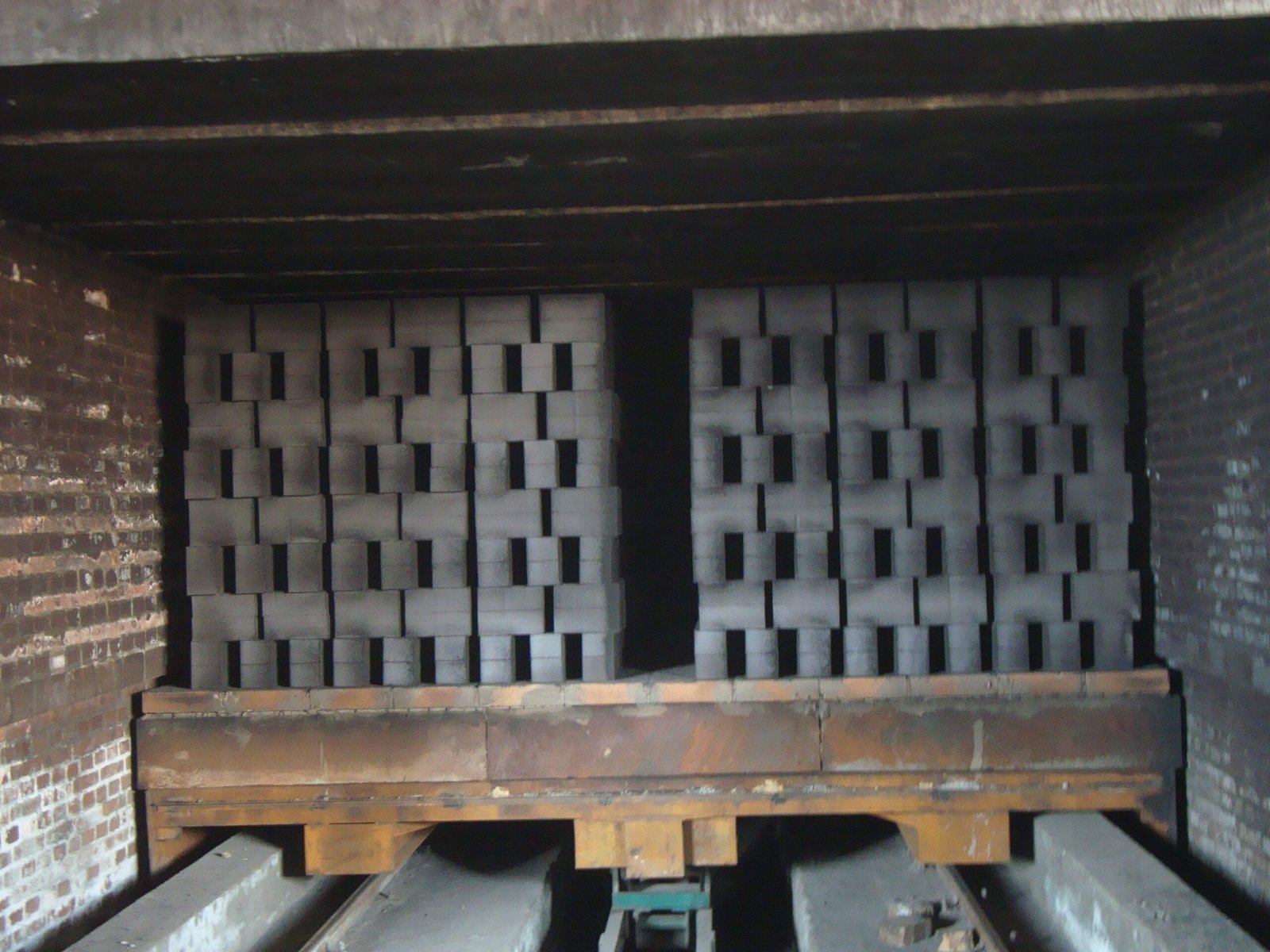
NES supplies the complete Kiln Construction Material package for tunnel kiln and hybrid Hoffman kiln projects. The kiln wall is built as a multi-layer structure: a thick refractory wall on the hot face, ceramic fibre insulation behind it, and an outer steel shell covering the assembly.
The hot-face refractory carries the structural load and resists the firing temperature, while the ceramic fibre layer and the cool air gap between the refractory wall and the steel shell keep the outer shell temperature below 100 °C — protecting the kiln structure, improving the working environment, and preventing condensation-related corrosion.
- Refractory bricks: fireclay, high-alumina, insulating
- Ceramic fibre: blanket, module, board
- Castables & mortars: dense + insulating grades
- Steel shell & anchors: complete supply
Pulverized Coal Burner System
The fuel feeding and combustion package that delivers controlled heat into every firing point of the tunnel kiln or Hoffman kiln roof.
Pulverized Coal Burner — PMXT-100 Series
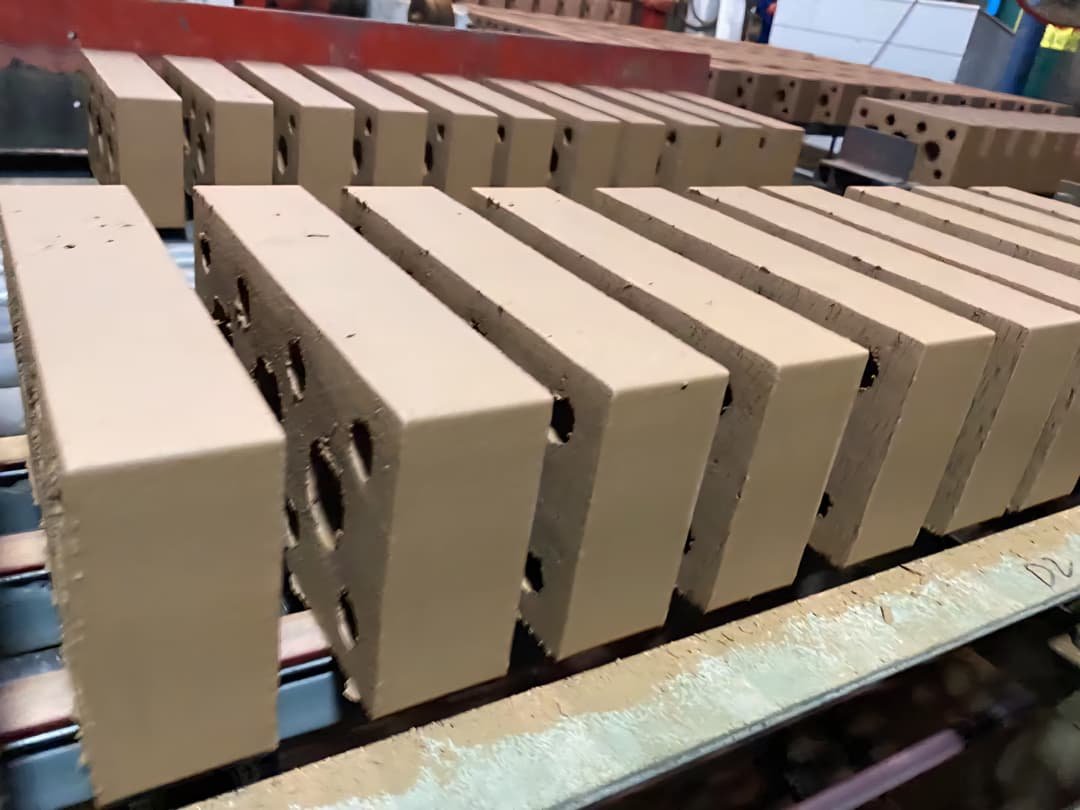
The PMXT-100 Pulverized Coal Burner is a top-fired automatic coal injection system for tunnel kilns and hybrid Hoffman kilns. Each burner set is paired with a hammer crusher that grinds raw coal to under 200 mesh, then a centrifugal fan and distributor evenly meter the pulverized coal to every fire point along the kiln roof.
The complete firing system integrates raw coal storage, weigh-belt feeding, crushing, drying, screw conveying, dust collection, chain feeding, and the burners themselves — controlled as one closed-loop automatic system. The burners are also capable of running on alternative solid fuels such as petroleum coke, sawdust, or coconut shell powder, giving plant operators flexibility based on local fuel cost and availability.
- Fuel: pulverized coal < 200 mesh
- Alt. fuels: pet coke, sawdust, biomass
- Firing position: top-fired (kiln roof)
- Control: fully automatic, PLC-linked
Fans, Blowers & Moisture Removal
Centrifugal and exhaust fans that transfer heat between kiln zones, supply combustion air, and remove moisture-laden air from the dryer.
Centrifugal Blower with Hz-Inverter (VFD)
The Centrifugal Blower is the workhorse of the kiln’s air system — used to circulate hot air, supply combustion and cooling air, transfer waste heat from the kiln to the dryer, and extract flue gas through the chimney. Each blower is paired with a frequency inverter (VFD / Hz-inverter) that lets the PLC adjust fan speed in real time based on temperature and pressure sensors.
Variable-speed control is what separates a modern energy-efficient kiln from an older fixed-speed installation: by intelligently adjusting blowing volume, the burning temperature, the blowing air, and the brick’s internal coal combustion can be optimally matched — reducing fuel consumption while maintaining stable kiln operation.
- Impeller diameter: 800 – 1250 mm
- Airflow: 12,000 – 32,000 m³/h
- Pressure range: 2,500 – 9,000 Pa
- Speed control: VFD (Hz-inverter)
- Casing: Q235 / Q345 / SS304
- Motor protection: IP54 / IP55
Moisture Removing Fan (Dryer Exhaust)
The Moisture Removing Fan is the dedicated exhaust fan that draws humid air out of the tunnel dryer — the air saturated with water vapor extracted from drying green bricks. Without effective moisture exhaust, humidity builds up inside the dryer, drying becomes uneven, and green bricks develop cracks and surface defects.
In modern auto brick plants the moisture-laden flue gas from the dryer is collected through a sealed ductwork system and routed through a desulfurization tower before atmospheric discharge — ensuring zero leakage operation and full compliance with environmental emission standards.
- Operating temperature: 10 – 200 °C
- Construction: corrosion-resistant casing
- Drive: VFD-controlled
- Function: humid air extraction
Tunnel Kiln Computer Monitoring System
PLC and SCADA-based supervisory control that turns the kiln into a fully monitored, recipe-driven, data-logged process.
Tunnel Kiln Computer Monitoring System (PLC + SCADA)
The Computer Monitoring System is the central nervous system of a modern tunnel kiln. Built on industrial PLC hardware (Siemens S7 or equivalent) combined with SCADA visualization software (WinCC, Ignition, or similar), it provides full real-time control of temperature zones, fan speeds, push cycles, fuel feed rates, and alarm management.
The kiln is typically divided into 6–8 temperature-controlled zones, each managed by an independent PID controller networked back to the supervisory computer. Operators select recipes from a stored library — each containing controller set-points, ramp rates, and product information — and the system automatically ramps the kiln to the required profile.
All firing temperatures, fan speeds, pressures, and motor statuses are continuously logged into a process database, generating reports, firing-curve graphs, and intelligence data that support quality assurance and decision-making.
- PLC: Siemens S7 / Rockwell / equivalent
- SCADA: WinCC / Ignition / iFix
- Temperature zones: 6 – 8 PID-controlled
- Car tracking: automated position log
- Recipe management: unlimited stored profiles
- Data logging: continuous historical database
Belt Conveyors & Material Transfer
The continuous-flow transport equipment that links every machine in the brick line — from raw clay feed to finished brick stacking.
Belt Conveyor (Heavy-Duty Industrial Type)
The Belt Conveyor is used throughout the brick plant for continuous material transport — from raw clay storage to the box feeder, between crusher and mixer, from mixer to extruder, and to move coal to the firing system. Rubber belts with nylon (NN) inner cord construction give the high tensile strength needed for clay and coal handling.
Belt conveyors are favored over other transport methods for their large transport capacity, long transport distance, low power consumption, long service life, low noise, and high safety/reliability. NES sizes each conveyor according to material type, throughput, lift angle, and operating environment.
- Belt width: 500 – 1200 mm
- Belt type: NN500 nylon-rubber
- Features: tear / heat / wear-resistant
- Drive: gear motor 5.5 – 11 kW
- Layout: horizontal or inclined
- Application: clay, sand, coal, ash
Supporting Equipment Selection Guide
| Equipment | Main Function | Tunnel Kiln | Hoffman Kiln |
|---|---|---|---|
| Ferry Pusher | Lateral kiln car transfer | ✓ Essential | — |
| Hydraulic Ferry Cart | Transfer + push integrated | ✓ Recommended | — |
| Hydraulic Pusher & Hauling Machine | Push & pull kiln car train | ✓ Essential | — |
| Kiln Car (refractory wagon) | Carry bricks through firing zone | ✓ Essential | — |
| Drying Car | Carry green bricks through dryer | ✓ Essential | — |
| Kiln Construction Material | Refractory + insulation + shell | ✓ Essential | ✓ Essential |
| Pulverized Coal Burner (PMXT-100) | Controlled top-firing system | ✓ Essential | ✓ Essential |
| Centrifugal Blower with VFD | Air movement & heat transfer | ✓ Essential | ✓ Essential |
| Moisture Removing Fan | Dryer humid air exhaust | ✓ Essential | Optional |
| Computer Monitoring System | PLC + SCADA process control | ✓ Recommended | Optional |
| Belt Conveyor | Material transport | ✓ Essential | ✓ Essential |
Engineering Partner for Complete Brick Plant Supply
Complete Equipment Package
One-source supply for all supporting equipment — matched, sized, and integrated for your specific kiln configuration.
Manufacturing Partnership
Strategic partnership with Dapeng Clay Brick Machinery & Kiln Construction in China gives access to proven, field-tested equipment designs.
Project Experience
Active projects in Bangladesh, China, and Kazakhstan — supporting equipment proven across South Asia, Central Asia, and the Middle East.
Installation & Commissioning
Technical guidance for layout, foundation, electrical integration, refractory lining, hot commissioning, and operator training.
After-Sales Support
Spare parts, refractory replacement scheduling, VFD/PLC diagnostics, and remote technical support across the lifetime of the plant.
Custom Engineering
Equipment specifications matched to brick size, daily output, fuel type, automation level, and local regulatory requirements.
Need Supporting Equipment for Your Brick Plant?
Contact Next Engineering Solutions Ltd for a complete quotation on ferry pushers, kiln cars, burners, blowers, monitoring systems, refractory materials, and any other supporting equipment for your tunnel kiln or hybrid Hoffman kiln project.