Coal-fired tunnel kiln technology is still widely used in many clay brick manufacturing markets because coal is available, affordable, and capable of supporting the high firing temperatures required for quality brick production. However, modern investors can no longer think only about production capacity. A successful brick plant must also consider fuel efficiency, emission control, environmental approval, worker safety, product quality, and long-term sustainability.
An eco-friendlier coal-fired tunnel kiln plant does not mean a pollution-free plant. It means a plant designed to reduce fuel waste, improve combustion control, recover heat, reduce dust and smoke, treat flue gas, and operate with better automation.
What Does “Eco-Friendlier Coal-Fired Tunnel Kiln” Mean?
For a coal-fired clay brick plant, eco-friendlier design means the whole production and firing system is engineered to reduce waste, stabilize quality, control emissions, and improve energy efficiency from the beginning.
1. Start with Proper Clay and Coal Analysis
A cleaner coal-fired tunnel kiln starts before the kiln is built. The first step is testing the clay, internal fuel demand, moisture content, shrinkage, plasticity, sulfur, fluorine, and firing behavior. The second step is checking the coal calorific value, sulfur content, ash content, volatile matter, and particle size.
For a cleaner project, the plant should avoid very high-sulfur coal and uncontrolled coal mixing. If coal is mixed into clay, the percentage should be controlled by testing, not by guesswork. Excess internal coal may create black core, over-firing, cracking, high smoke, and unstable kiln operation.
2. Use a Fully Automatic Clay Preparation and Forming Line
A fully automatic clay brick plant should begin with stable raw material preparation. Poor clay preparation creates uneven moisture, uneven density, weak green bricks, unstable drying, and unstable firing.
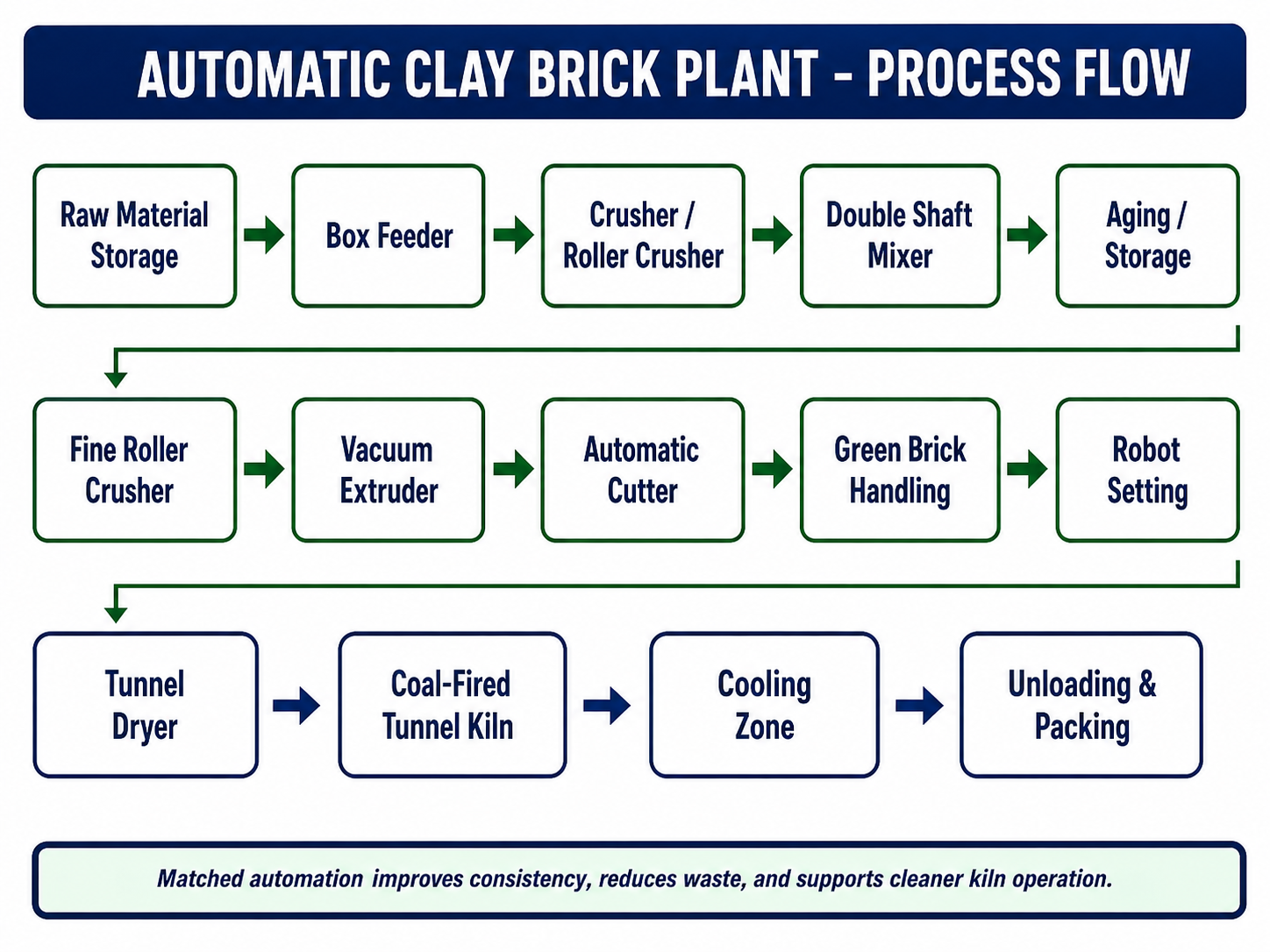
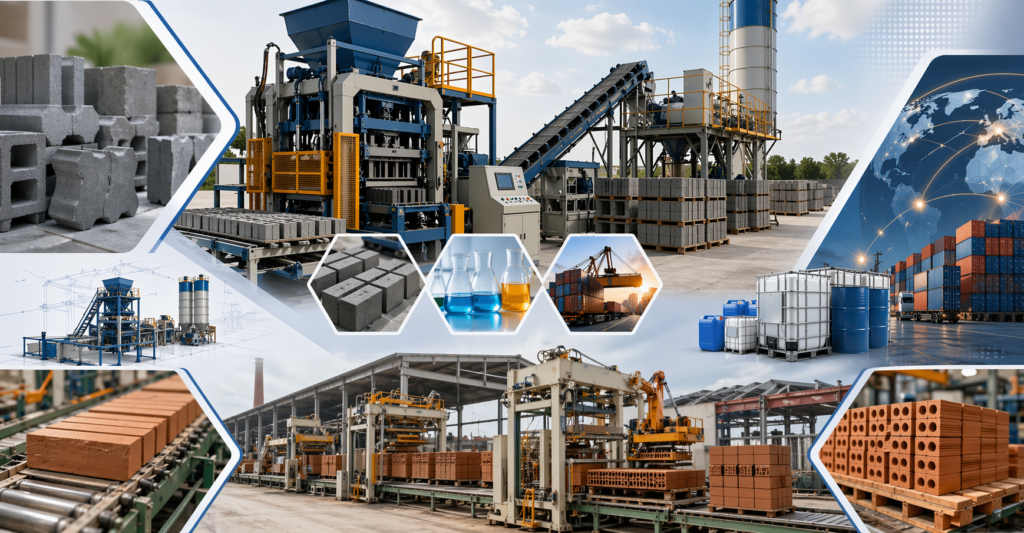
Automatic clay brick manufacturing process flow from raw material preparation to tunnel kiln firing and final packing.
Stable feeding for raw material flow.
Uniform clay preparation and moisture balance.
Dense, uniform green brick shaping.
Reduced handling damage and stable loading.
Uniform green bricks dry and fire more evenly. This reduces fuel waste, broken bricks, over-burned bricks, under-burned bricks, and unnecessary heat loss. In an eco-friendlier coal-fired tunnel kiln project, automation is not only for reducing labor. It is also for improving product consistency and reducing waste.
3. Design the Dryer and Kiln as One Matched System
Many investors think the kiln is the main equipment and the dryer is secondary. This is a mistake. In a coal-fired tunnel kiln plant, the dryer and kiln must be designed as one integrated thermal system.
If green bricks enter the kiln with high or uneven moisture, the kiln consumes more fuel, firing becomes unstable, smoke increases, and brick quality becomes inconsistent. Proper drying reduces thermal shock, improves firing efficiency, and lowers rejection.
4. Use Controlled Coal Firing Instead of Uncontrolled Burning
The biggest difference between an ordinary coal-fired kiln and a cleaner coal-fired kiln is control. Uncontrolled coal burning creates smoke, high CO, fuel waste, uneven firing, and poor brick color.
| Control Area | Why It Matters | Recommended Solution |
|---|---|---|
| Coal Feeding Rate | Prevents over-firing and incomplete combustion. | Controlled dosing and operator training. |
| Air Supply | Supports complete combustion and reduces smoke. | VFD fans, dampers, and balanced airflow. |
| Temperature Curve | Maintains stable brick color and strength. | Zone sensors and PLC monitoring. |
| Kiln Pressure | Reduces cold air leakage and unstable draft. | Pressure monitoring and draft balance. |
5. Improve Kiln Insulation and Reduce Heat Leakage
Heat leakage is one of the silent causes of high coal consumption. Poor insulation, air leakage, poor kiln car sealing, weak refractory lining, and poor door sealing can waste a large amount of energy.
Every unit of heat saved inside the kiln reduces coal demand. Lower coal demand means lower emissions, lower operating cost, and better environmental performance.
6. Use Waste Heat Recovery for Drying
A cleaner coal-fired tunnel kiln should not waste hot air from the cooling zone. The hot air should be recovered and sent to the dryer, preheating system, or other useful process areas.
Lower Coal Consumption
Less separate fuel is needed for the dryer.
Stable Drying
Better control reduces cracking and deformation.
Lower Emission per Brick
Improved thermal efficiency reduces total fuel use.
7. Install a Smoke Filter Tower and Flue Gas Treatment System
Even with good coal and good firing control, a coal-fired tunnel kiln still needs a proper flue gas treatment system. This is where the Smoke Filter Tower becomes important.
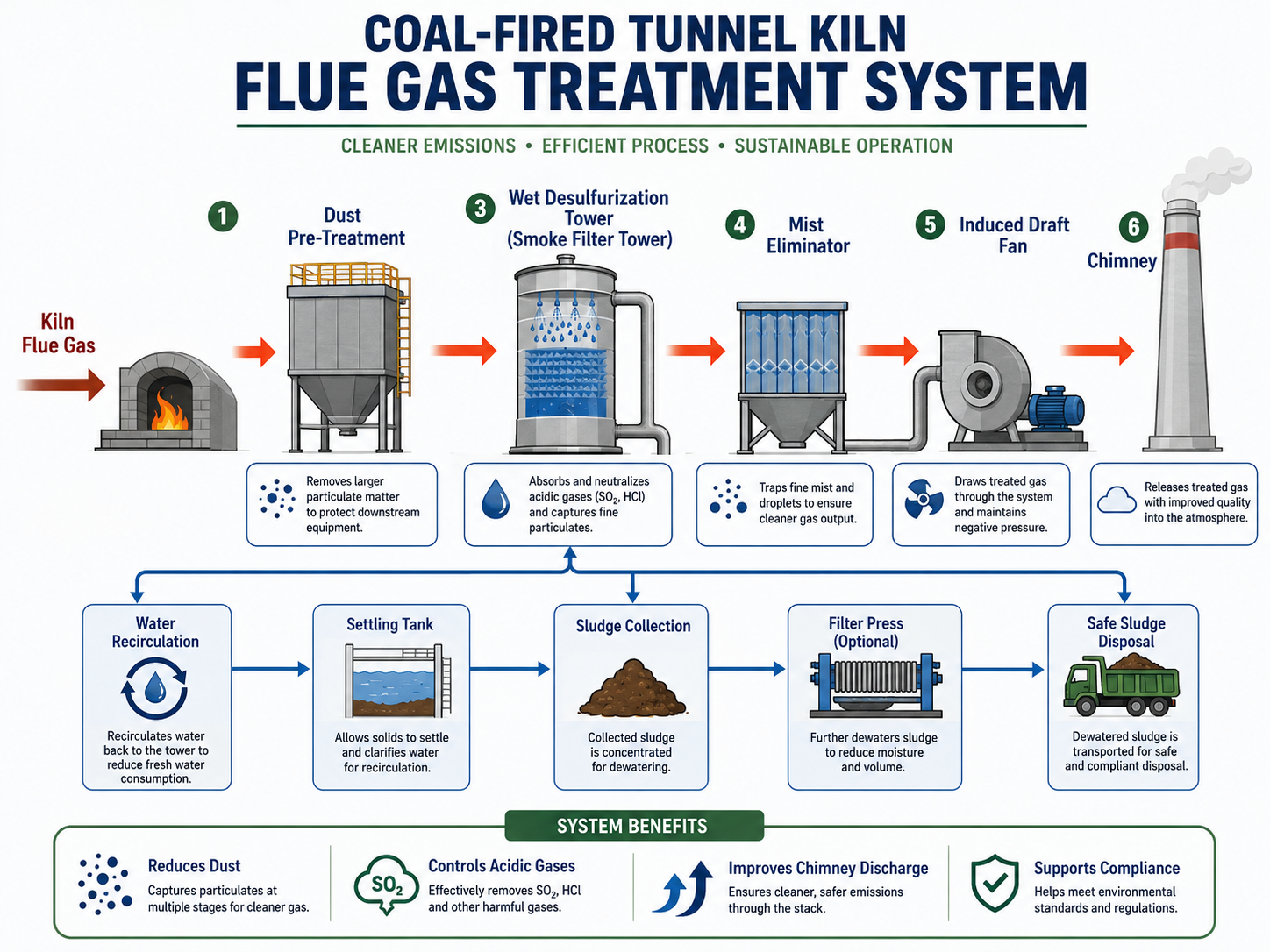
Flue gas treatment system for coal-fired tunnel kiln, including dust pre-treatment, smoke filter tower, mist eliminator, induced draft fan, chimney, water recirculation, sludge collection and safe disposal.
The smoke filter tower uses chemical water spray to capture dust and absorb acidic gases such as SO₂, HF, and HCl. It can also reduce visible smoke and ash from the chimney when properly designed and operated.
8. Monitor the Smoke Filter Tower Properly
A smoke filter tower is effective only when it is operated correctly. If pump flow is low, nozzles are blocked, chemical dosing is wrong, pH is uncontrolled, or scaling occurs inside the tower, the removal efficiency will drop.
9. Manage Wastewater and Sludge Responsibly
A wet smoke filter tower does not make pollutants disappear. It transfers part of the pollution from air into water and sludge. Therefore, bottom pools, settling tanks, sludge removal systems, and wastewater management are very important.
The plant should avoid direct discharge of dirty water. A cleaner system should include settling tanks, reaction tanks, sludge collection, periodic sludge removal, pH adjustment, water recirculation, filter press if required, and safe sludge disposal.
10. Control Dust in Raw Material Preparation Area
A coal-fired tunnel kiln plant may look clean at the chimney but still create dust in the raw material preparation area. Clay storage, coal handling, crushing, mixing, conveyor transfer points, and internal road movement can generate dust.
11. Use Automation for Energy and Emission Control
Automation is a major part of cleaner kiln operation. A fully automatic clay brick plant should not depend only on manual judgment. Operators are still important, but sensors and controls help keep the system stable.
Recommended automation features include PLC-based kiln control, temperature monitoring in each kiln zone, dryer temperature and humidity control, kiln pressure monitoring, fan VFD control, automatic car movement, coal dosing control, alarm systems, production data logging, optional oxygen/CO monitoring, and smoke filter tower pH and pump monitoring.
12. Reduce Rejection Rate to Reduce Environmental Impact
One of the most ignored points in eco-friendly brick manufacturing is rejection rate. If a plant produces many cracked, broken, under-fired, or over-fired bricks, it wastes clay, coal, electricity, labor, and production time.
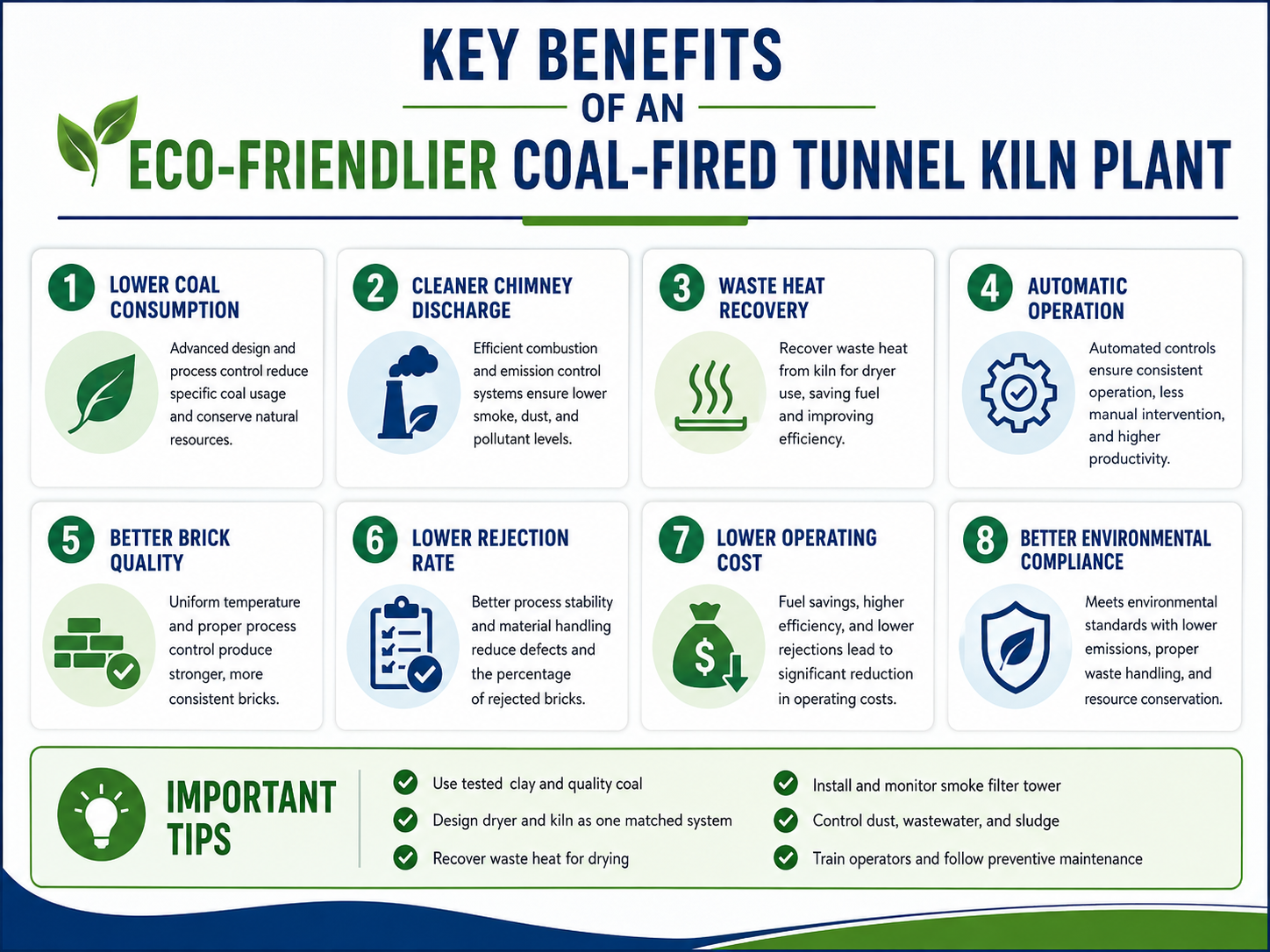
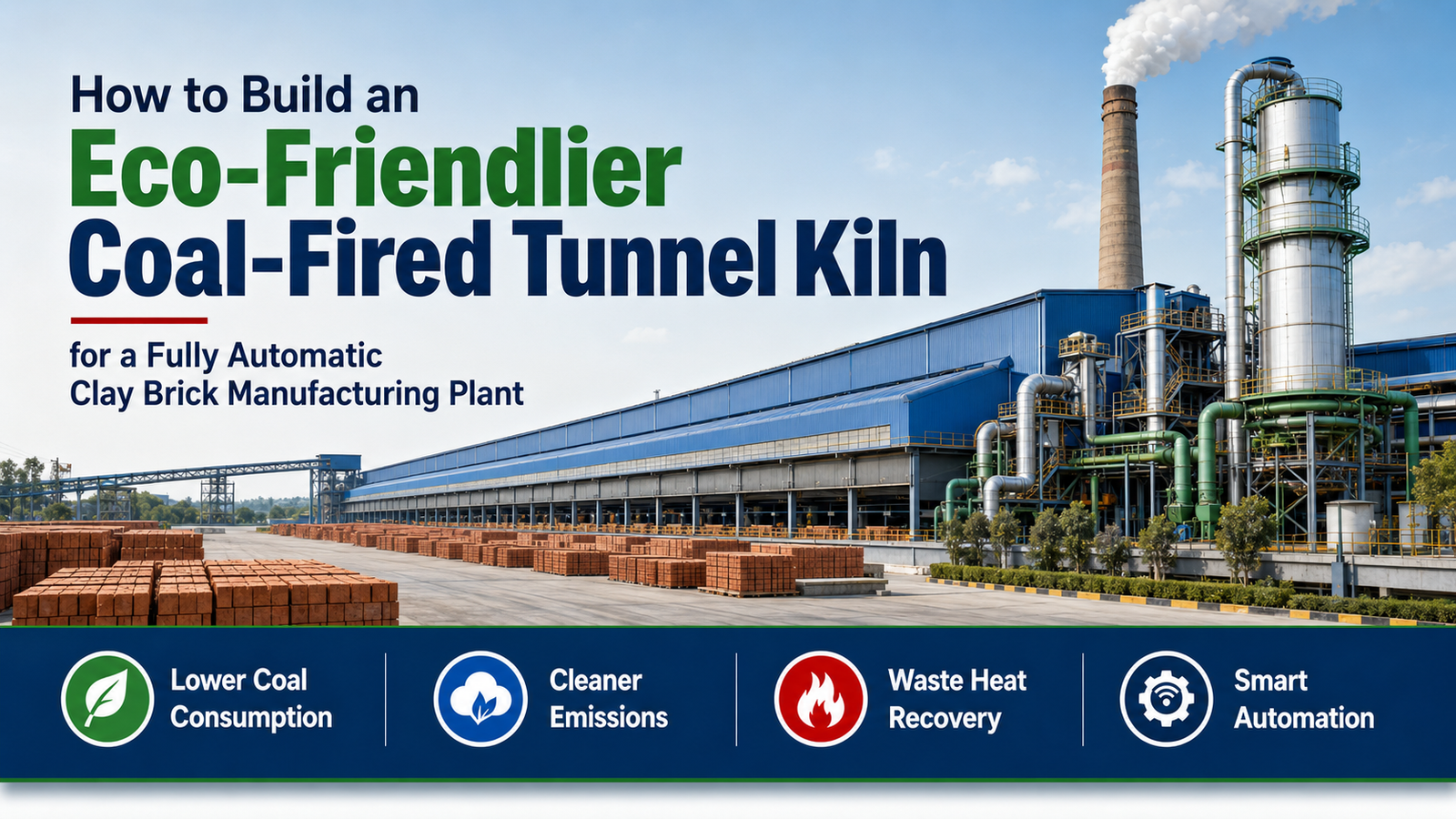
Key benefits of an eco-friendlier coal-fired tunnel kiln plant: lower coal consumption, cleaner chimney discharge, better brick quality, waste heat recovery, lower rejection rate and improved environmental compliance.
13. Recommended Eco-Friendlier Coal-Fired Tunnel Kiln Configuration
For stricter projects, the system may include a pre-dust collector, bag filter or wet electrostatic precipitator, wet desulfurization tower, demister, CEMS or periodic stack testing, NOx control system if required, wastewater treatment, and filter press.
The exact configuration depends on clay condition, coal quality, production capacity, local environmental standard, available land, and investment plan.
14. Common Mistakes to Avoid
- Selecting kiln only by price
- Ignoring clay and coal analysis
- Using high-sulfur coal without treatment
- Overusing internal coal in the clay body
- Poor dryer design and no heat recovery
- Manual coal feeding without control
- Weak kiln insulation and poor sealing
- No smoke filter tower or sludge treatment system
- No stack testing platform
- No training for firing operators
A clean coal-fired tunnel kiln is not made by one machine. It is made by proper design, matched equipment, disciplined operation, and continuous monitoring.
NES Engineering View
A coal-fired tunnel kiln can be made significantly cleaner and more efficient when the full system is designed correctly. The key is not only installing a tunnel kiln, but building a complete automatic clay brick manufacturing plant with controlled firing, heat recovery, emission treatment, sludge management, and smart operation.
Conclusion
Building an eco-friendlier coal-fired tunnel kiln firing system is possible, but it requires a complete engineering approach. The project must combine good raw material testing, automatic clay preparation, efficient dryer design, controlled coal firing, waste heat recovery, strong kiln insulation, smoke filter tower, dust control, wastewater management, and smart automation.
A coal-fired plant cannot honestly be described as zero-emission. But with the right design, it can become a cleaner, more efficient, more responsible, and more commercially practical clay brick manufacturing plant.
Next Engineering Solutions Ltd. provides complete automatic clay brick plant solutions, including tunnel kiln systems, tunnel dryers, machinery lines, automation, flue gas treatment systems, layout design, installation support, commissioning, and production guidance.
For a modern coal-fired brick plant, the goal should be clear: produce strong bricks, reduce fuel waste, control emissions, and build a cleaner industrial future.
Related Article Links —
Plan a Cleaner Coal-Fired Tunnel Kiln Brick Plant with NES
Contact Next Engineering Solutions Ltd. for automatic clay brick plant planning, tunnel kiln design, smoke filter tower, flue gas treatment, machinery supply, installation support, and commissioning guidance.